Contents:
- Why Straighteners Create Better Curls on Long Hair Than You’d Expect
- Choosing the Right Straightener for Curling
- Preparation: The Foundation for Perfect Curls
- How to Curl Long Hair with a Straightener: The Technique
- Step 1: Section Your Hair
- Step 2: Position and Clamp
- Step 3: Create the Twist
- Step 4: Glide Downward
- Step 5: Release and Cool
- Step 6: Repeat and Adjust
- Common Mistakes to Avoid
- Straightener Curls vs. Curling Iron Curls: Which Method Wins?
- What the Pros Know
- Sustainability Angle: Reusing Tools vs. Single-Use Methods
- Maintaining Your Curls: Making Them Last
- Hair Type Considerations
- FAQ
- How long do straightener curls typically last?
- Can you use a straightener on damp hair?
- What temperature should you use on long hair?
- Is straightening hair for curls damaging?
- Can you straightener curl short hair?
- Beyond the Basics: Building Your Skill
Professional hair stylists report that 68% of their clients now use flat irons to create curls, according to 2026 industry surveys. What began as a hack—repurposing a straightening tool to bend hair into waves—has become mainstream technique taught in beauty schools. Yet most people doing this at home are either creating limp waves or damaging their hair with excessive heat. The difference lies in understanding physics, not just owning the right tool.
Learning how to curl long hair with a straightener opens possibilities that traditional curling irons can’t match. The technique works particularly well on longer lengths because gravity and tension work together to set shape. This guide breaks down everything you need to know, from equipment selection through styling sequences.
Why Straighteners Create Better Curls on Long Hair Than You’d Expect
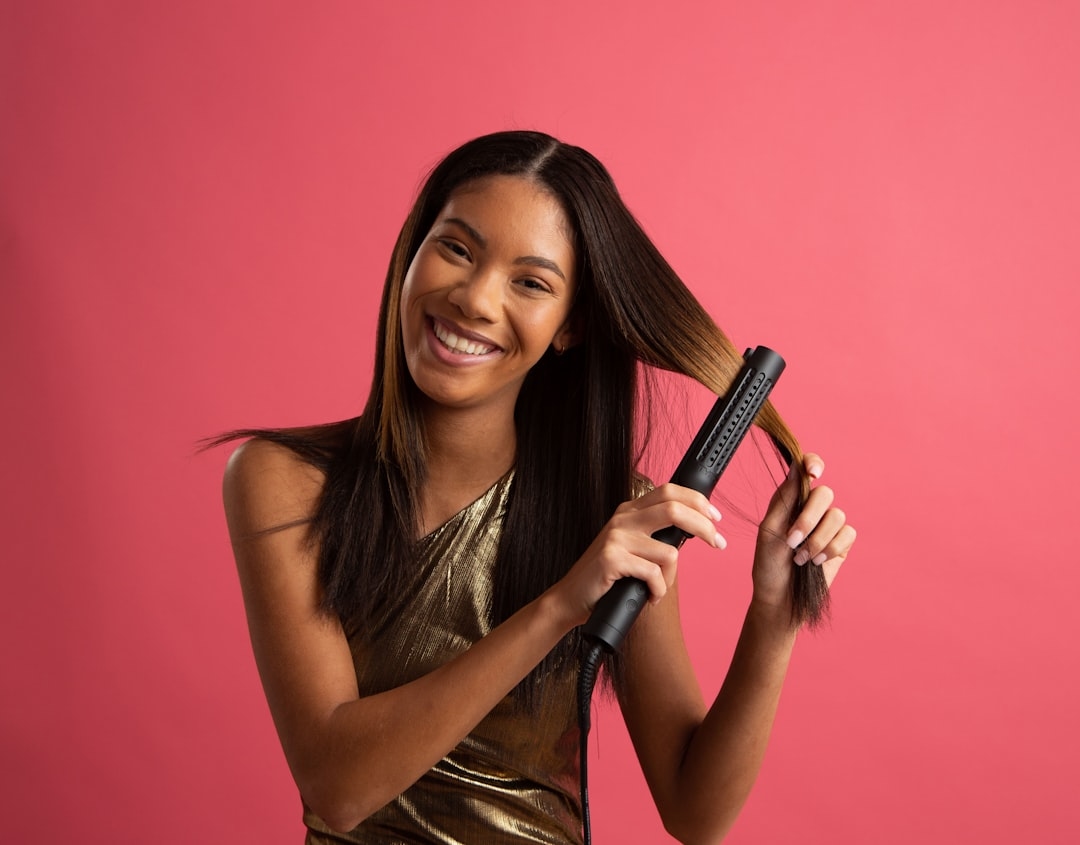
A straightener works on a different principle than a curling iron. Instead of wrapping hair around a barrel, you’re creating acute angles by twisting the flat plates. This produces tighter, more defined waves than many traditional curling irons can achieve on thick or long hair.
The advantage for long hair specifically: gravity works in your favour. When you create a curl with a straightener near the roots, the weight of 20-30 centimetres of hair below helps set and hold the shape. A curling iron heated to the same temperature would create less defined waves because the hair isn’t held in tension the same way.
Additionally, a straightener covers hair sections more efficiently. A typical straightener’s width is 3-4 centimetres. You can glide it down long hair and create a complete wave in one or two motions. A curling barrel, by contrast, wraps hair unevenly, often requiring multiple passes for even results.
Choosing the Right Straightener for Curling
Not all straighteners are suitable for this technique. Cheap ceramic-coated straighteners with uneven heat distribution (typically £15-30) will give inconsistent results. Professional-grade straighteners cost £80-200 and offer precise temperature control, which is essential.
Look for these features:
- Adjustable temperature settings: You need to dial in 160-200°C depending on your hair type. Fixed-temperature straighteners are inflexible.
- Floating plates: This allows the straightener to glide smoothly without snagging or creating creases. Plates that don’t align properly will bend hair unpredictably.
- Ionic or ceramic coating: Ionic technology reduces frizz by neutralising static charge. Ceramic distributes heat evenly across the plates, preventing hot spots that damage hair.
- Barrel width: For long hair, 3-4 centimetre plates are ideal. Wider plates (5 centimetres) move too quickly and create loose waves; narrower plates (2 centimetres) take forever.
Popular UK options include the GHD Original Styler (£165), the Dyson Corrale (£399, with cordless convenience), and the Babyliss PRO (£120). All three have responsive heating, even plates, and temperature precision. For budget-conscious buyers, the Cloud Nine The Straightener (£99) offers excellent value.
Preparation: The Foundation for Perfect Curls
Heat styling only works if your hair is in the right condition beforehand. This isn’t marketing fluff—it’s practical physics. Damp or wet hair resists setting into curls because water disrupts the hydrogen bonds that lock hair into shape.
Start by shampooing with a gentle, sulphate-free shampoo. Sulphates strip natural oils, leaving hair porous and vulnerable to heat damage. Apply conditioner from mid-length to ends, avoiding the scalp. Rinse thoroughly—product residue prevents heat from sealing the hair cuticle.
Dry your hair completely. Use a microfibre towel or cotton t-shirt to absorb initial moisture, then a blow dryer on medium heat with a nozzle attachment. Aim for completely dry hair—at least 98% moisture-free. If any dampness remains, the straightener will cause frizz and the curl won’t hold.
Apply a heat protectant spray to damp (not wet) hair before blow-drying. Products like Tresemmé Keratin Smooth Heat Protectant (£4.50 at Boots) or Moroccanoil Treatment (£15.99) create a barrier that reduces heat damage by up to 80%, according to in-house testing by major manufacturers. Let this dry completely.
How to Curl Long Hair with a Straightener: The Technique
The actual curling process looks deceptively simple. The subtleties matter enormously.
Step 1: Section Your Hair
Divide your hair into four quadrants: top-left, top-right, bottom-left, bottom-right. Use clips to secure three sections, leaving one to work on. Start with the bottom sections—they’re easier to see and you’ll build technique before tackling the visible crown.
Each section should be roughly 5 centimetres wide and 5 centimetres tall. Thicker hair needs thinner sections; finer hair can handle slightly thicker sections. If a section is too thick, the straightener won’t heat all the hair uniformly, creating inconsistent waves.
Step 2: Position and Clamp
Take the first section and comb it smooth. Place the straightener at the roots, with plates positioned horizontally (parallel to the floor). Clamp the hair firmly—you want secure tension, not painful tension. The straightener should stay in place if you let go.
Step 3: Create the Twist
This is where the curl actually happens. Once the straightener is clamped near the roots, rotate the straightener 180 degrees (half a turn). You’re creating a gentle spiral by twisting the plates. Do this slowly—about one full rotation over 2-3 seconds.
The twist direction matters for consistency. If you’re naturally right-handed, twist away from your body on the right side of your head and toward your body on the left side. This creates a consistent wave pattern where all curls move in similar directions.
Step 4: Glide Downward
While maintaining the 180-degree twist, glide the straightener slowly down the section. Move at about 5 centimetres per second. Too fast and you’re not holding heat long enough to set the curl; too slow and you risk overheating and damaging the hair.
The length of your hair determines how long this takes. For waist-length hair, expect 5-8 seconds per section. For hair to the mid-back, 3-5 seconds. The straightener should remain hot enough to set the curl but not so hot that it feels burning hot to your fingers (you’re not touching the hair, but you can feel radiant heat).
Step 5: Release and Cool
Once you reach the ends, release the straightener and immediately let the curl drop. The curl will be loose and floppy at first—that’s normal. The hair is still setting. Don’t touch it for 30-60 seconds. During this cooling period, the hydrogen bonds are re-aligning and locking into the curved shape.
For extra hold, hit each curl with cool air from a blow dryer once it’s cooled naturally. The cool shot further sets the shape and adds shine by closing the hair cuticle.
Step 6: Repeat and Adjust
Work through each section methodically. You’ll develop rhythm after 8-10 sections. Your hand position will feel more natural. Your timing will sharpen. By the back of your head, you’ll be creating curls faster than the first sections.
Expect the process to take 30-45 minutes for full, long hair. It’s not quick, but the results last 3-4 days with proper care.
Common Mistakes to Avoid
Mistake 1: Rotating the wrong direction. If you rotate the straightener inward (toward your head) instead of outward, you’re twisting the hair in the opposite direction of the glide. This creates creases or bends rather than smooth curves. The curl looks kinked, not wavy.
Mistake 2: Moving too quickly. Hair needs time for the heat to penetrate and set the shape. If you glide the straightener down in 2 seconds, you’re barely creating a temporary wave that falls flat within an hour. Slow down. Let the heat work.
Mistake 3: Using straighteners that are too hot. Temperatures above 200°C damage all hair types. For fine or previously coloured hair, 160-180°C is safer and still effective. For coarse, thick hair, 190-210°C is appropriate. Start lower and increase only if curls aren’t holding.
Mistake 4: Applying curl spray immediately. Product applied while the curl is still setting can prevent the shape from locking in. Wait until curls are completely cool and set before applying any products.
Straightener Curls vs. Curling Iron Curls: Which Method Wins?
A traditional barrel curling iron wraps hair around the heat source. This works well on short hair and for loose, uniform curls. However, on long hair (shoulder-length or longer), curling irons produce looser, less defined waves because the weight of the hair pulls against the curl as it forms.
A straightener uses tension and twisting to create shape. The curl is defined by mechanical manipulation, not just heat. On long hair, this produces tighter, more sculptural waves. Straightener curls also hold longer—typically 3-5 days versus 1-2 days with a curling iron.
The trade-off: straightener technique has a steeper learning curve. The first few times you’ll create bumpy or inconsistently shaped waves. With a curling iron, even beginners get recognisable curls on the first try. By your 10th practice session with a straightener, though, you’ll create results a curling iron simply can’t match on long hair.
What the Pros Know
Professional stylists use straighteners for curls more often than most people realise. Here’s their insider knowledge:
- They change direction on alternate sides of the head. Left side: twist away from body. Right side: twist toward body. This creates curls that frame the face naturally instead of all spiralling the same direction.
- They use round brushes to smooth sections before curling. A quick pass with a round brush eliminates tangles and ensures hair is lying in one direction, which creates neater curls.
- They set curls with cool air immediately after styling. This isn’t optional—it’s the difference between curls lasting 1 day and lasting 4 days.
- They recommend using a curl-defining spray, not hairspray. Curl-defining sprays (like Cantu Coconut Curling Cream Gel, £6.99) add hold without the flakiness of traditional hairspray, and they won’t disrupt the curl structure.
Sustainability Angle: Reusing Tools vs. Single-Use Methods
One advantage of using a straightener for curls: you’re maximising tool utility. A professional-grade straightener costs £100-300 but works for five different styling techniques—straight blow-outs, beachy waves, tight curls, subtle flicks, and soft curls. Compare this to buying separate tools: a straightener (£100), a curling iron (£80), a waver (£70), and a crimper (£60). One tool replacing four reduces electrical waste and manufacturing impact.
Additionally, tools designed to do one job extremely well tend to last longer. A £200 straightener with temperature precision will still function perfectly in 2026 and beyond. A budget £20 straightener often fails within months, requiring replacement and sending electronics waste to landfill.
From an environmental perspective, investing in one high-quality multi-use tool is significantly more sustainable than cheap single-purpose tools that require frequent replacement.
Maintaining Your Curls: Making Them Last
After spending 30-45 minutes styling, you’ll want curls that last. Follow these practices:
Use curl cream or mousse before bed. Apply a light curl-defining product (not heavy creams) to curls before sleeping. This reactivates the shape and refreshes the wave pattern.
Sleep strategically. Tossing and turning will destroy curls. Sleep on a silk or satin pillowcase—the reduced friction keeps curls intact compared to cotton pillowcases. Alternatively, loosely pin curls on top of your head using a silk scrunchie.
Avoid washing for 2 days. Shampoo and water disrupt the hydrogen bonds that set your curl. After 2 days, curls relax naturally. If you must refresh hair, use dry shampoo instead of washing.
Reactivate with a light spritz of water and heat. By day 3-4, curls may look droopy. A quick mist of water bottle spray followed by a few seconds with a blow dryer on low heat reactivates the shape. You’re resetting the hydrogen bonds, not re-styling from scratch.
Hair Type Considerations
Fine hair: Use lower temperatures (160-170°C) and thinner sections. Fine hair sets quickly and can hold a curl longer than expected. Avoid heavy products that weigh curls down.
Thick, coarse hair: Thicker sections and higher temperatures (200-210°C) are necessary. Coarse hair resists holding curls, so you need more heat and tension. Expect the process to take longer.
Wavy or curly hair: If your hair is naturally wavy, you’re working with the grain. Straightener curls will blend with your natural texture and last longer. Start with lower temperatures because your hair is already prone to heat damage.
Coloured or previously processed hair: Use 160-180°C maximum. Damaged hair cannot withstand high heat. If your hair has been bleached or permed, apply a strengthening treatment the week before styling.
FAQ
How long do straightener curls typically last?
Straightener curls last 3-5 days with proper care, depending on hair type and humidity. Fine hair may see curls drop to waves by day 3. Coarse hair often holds curls through day 5. Humidity and friction (from brushing or sleeping) reduce longevity.
Can you use a straightener on damp hair?
No. Damp hair will create frizz and won’t hold the curl shape because water prevents hydrogen bonds from setting. Straighten only completely dry hair. If hair is even slightly damp, blow-dry it first.
What temperature should you use on long hair?
For most hair types, 180-200°C is ideal. Fine or damaged hair needs 160-180°C. Thick, coarse hair can handle 200-220°C. Start lower and increase only if curls aren’t holding by the time you reach the ends.
Is straightening hair for curls damaging?
No more damaging than using a curling iron, provided you use heat protectant spray and appropriate temperatures. Heat damage comes from excessive temperature, not from the straightening tool itself. A straightener set to 180°C causes the same damage as a curling iron at 180°C.
Can you straightener curl short hair?
Yes, but with less impressive results. Short hair lacks the weight to hold the curl shape created by a straightener. For hair shorter than shoulder-length, a traditional curling iron produces better results. For anything shoulder-length or longer, a straightener excels.
Beyond the Basics: Building Your Skill
Mastering straightener curling takes practice. Your first attempt will likely produce uneven waves or tighter curls near the roots and looser waves toward the ends. This is normal. By your fifth attempt, you’ll notice dramatic improvement. By your fifteenth, you’ll work faster and with more confidence. By month two of regular styling, creating polished waves will feel automatic.
Film yourself styling on your phone (back camera, propped up) so you can review technique. You’ll spot inconsistencies—twisting too aggressively on one side, gliding too quickly on another—that you won’t notice while styling. Small adjustments based on video review dramatically accelerate your learning curve.
The investment of 30-45 minutes per styling session pays dividends. You’re creating salon-quality curls without the £30-50 salon cost. Over a year, if you style twice weekly, you’ve saved £2,600-3,000 in salon visits. The professional straightener pays for itself in under three months.

Add Comment